
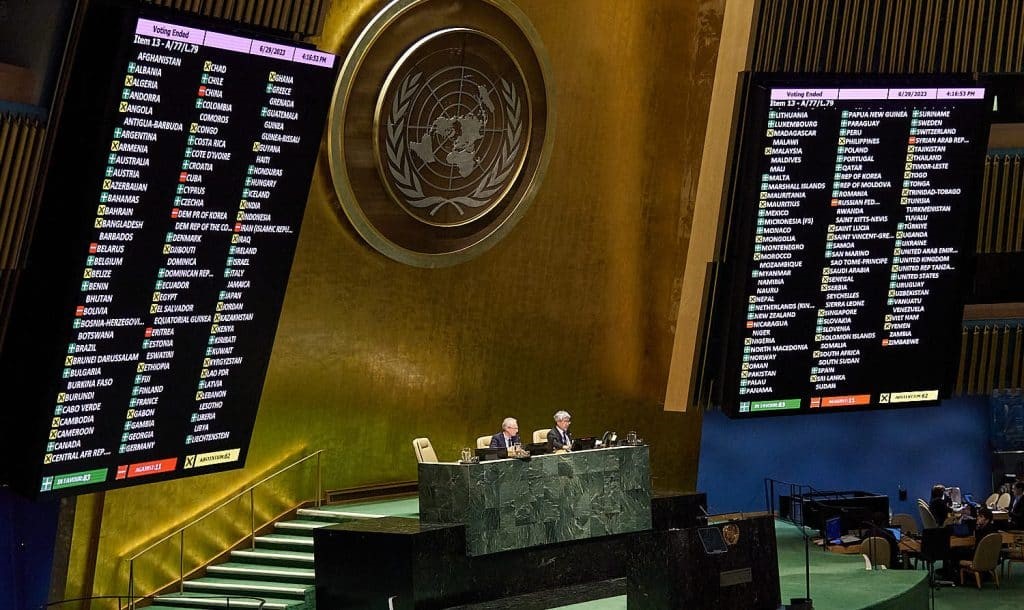
30 June – The International, Impartial and Independent Mechanism – Syria (IIIM) welcomes the UN General Assembly’s decision yesterday to establish an independent institution to clarify the fate and whereabouts of all missing persons in Syria and to provide support to victims, survivors and the families of those missing, in close cooperation and complementarity with all relevant actors.
“This development represents a substantial breakthrough, honouring the unwavering efforts of civil society organisations, victim/survivor associations and families who have persistently called for an international humanitarian response,” said the Head of the IIIM, Catherine Marchi-Uhel.
“For far too long the families have grappled alone with the uncertainty surrounding the fate of loved ones forcibly disappeared, missing, or detained. Their tireless advocacy has now led to the establishment of a dedicated entity to directly address their pressing needs and uphold their right to know.”
Catherine Marchi-Uhel added, “The IIIM is ready to cooperate with this new, independent and humanitarian institution, as requested by the General Assembly and in accordance with the complementary mandates of the two entities.”
Statement on the Dutch – Canadian Application against Syria at the ICJ
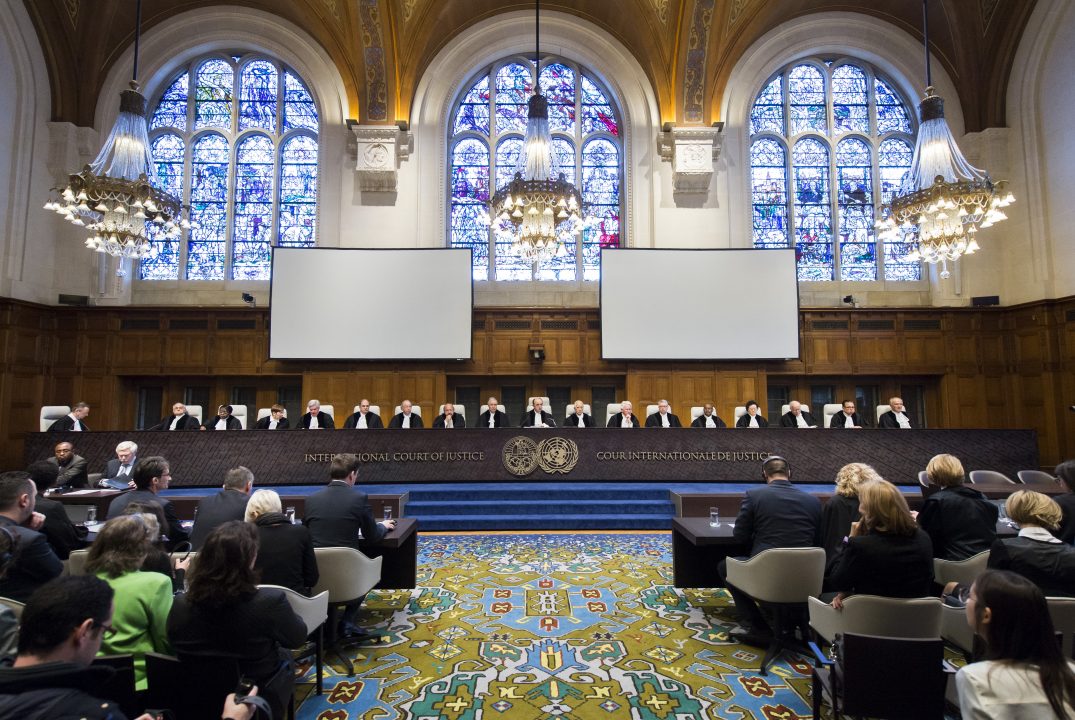
On June 12, the International Court of Justice (ICJ) announced that a joint application had been filed by the Kingdom of the Netherlands and Canada against the Syrian Arab Republic. The application relates to alleged violations of the Convention against Torture and Other Cruel, Inhuman, or Degrading Treatment or Punishment.
The International, Impartial and Independent Mechanism – Syria (IIIM) welcomed the announcement and stated its readiness to support the proceedings initiated before the ICJ. The Head of the IIIM, Catherine Marchi-Uhel said: “This step represents a significant milestone in the ongoing struggle against impunity, and for the victims and survivors affected by these crimes and violations.”
The Dutch- Canadian Accountability Initiative represents the type of justice process that the IIIM was established to assist. Since its inception the IIIM has concluded over 84 cooperation frameworks that have allowed it to build a vast and diverse repository of information and evidence which enables it to seize opportunities for justice that currently exist and prepare for those that may emerge in the future. On the application to the ICJ, Ms. Marchi-Uhel said, “We are prepared to support the ICJ’s determination of the Dutch-Canadian initiative. My team’s work on detention related crimes as part of the IIIM’s structural investigation is directly relevant to this initiative.”
The case initiated at the ICJ is one of the many concrete justice developments that the IIIM will support. Since it became operational in 2018 the number of requests for assistance the IIIM has received per year has tripled. To date there have been 280 such requests from 15 competent jurisdictions, out of which the IIIM team have been able to facilitate 143 distinct investigations.
“Each request we receive is an encouraging sign from jurisdictions of their commitment to accountability. A sign that there is an outcome to the tireless efforts of Syrian civil society in continuing to document and report violations of international law, and a sign to victims and survivors that their right to justice will be honoured.”
The IIIM’s assistance to competent jurisdictions is varied and includes the provision of information and evidence that it collects, records of witness interviews that it conducts; and legal briefs, factual analytical reports, and geolocation reports that it prepares.
Some of the recent cases that the IIIM has supported include:
- Germany’s Moafak D. case, culminating in a conviction for war crimes and murder, and a life imprisonment sentence.
- The ongoing Alaa M. case in Germany, where the accused is under trial for sexual violence and the murder of Syrian civilians while serving as a military doctor.
- The Lafarge case in France, where the court upheld a decision that the company could be charged for aiding and abetting crimes against humanity.
- A French case where senior Syrian government officials have been indicted for complicity in crimes against humanity and war crimes.
- Two cases in Sweden which resulted in the conviction of three individuals affiliated with ISIL.
This of course does not include earlier contributions such as our support to the Anwar R. case in Koblenz, Germany, leading to the landmark judgement for crimes against humanity.
These examples of cases that the IIIM has supported illustrate the breadth of the IIIM’s contribution to justice across differing jurisdictions. The IIIM continues to assist many other investigations and prosecutions, both in response to requests and proactively.
The IIIM continues to explore ways to support justice initiatives for Syria. It aims to reinforce the voices of victims/survivors in these efforts, acknowledging their essential role in the global pursuit of justice and accountability. The IIIM reaffirms itscommitment tocollaborate closely with victims/survivorsto uphold these principles and to work with other actors to ensure an inclusive international accountability ecosystem.
The joint application and ICJ statement can be accessed on the court’s website here.
ENDS
IIIM urges for sustained financing to preserve its impact
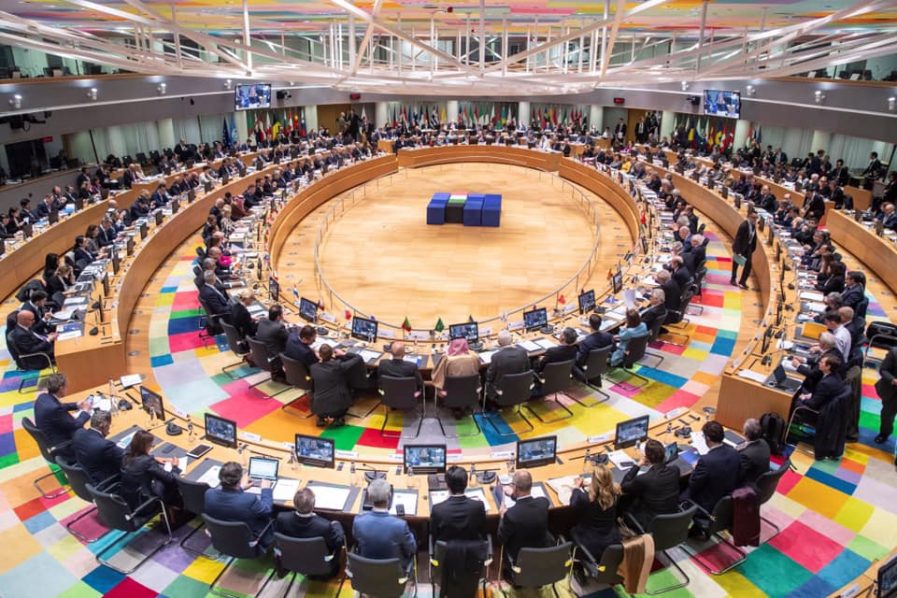
Brussels, June 15 – During the seventh edition of the EU’s Brussels Conference on the future of Syria, Catherine Marchi-Uhel, the Head of the IIIM, called for Member States to reinforce their support for the IIIM’s work.
In her remarks at the Ministerial Day of the conference, Ms. Marchi-Uhel highlighted the welcome rise in jurisdictions prosecuting core international crimes, with the IIIM providing support for 143 separate investigations across 15 such competent jurisdictions. She expressed gratitude to Member States for enabling this work through their voluntary contributions, but also indicated a critical trend: with requests for assistance to the IIIM tripling annually since 2018, the organization’s capability to continue to respond to the incoming number of requests, while also engaging in proactive substantive work to anticipate the needs of competent jurisdictions, is at risk without a proportional increase in funding.
“If we are to maintain the pace, volume, and quality of our support to jurisdictions and our two-way engagement with our many civil society partners, victims and survivors, additional voluntary contributions are necessary,” said Ms. Marchi-Uhel
She specifically called for “predictable, multi-year funding commitments” to ensure the sustainability of the IIIM’s successful justice facilitation approach, and that its expertise and mission is not compromised.
You can read Ms. Marchi-Uhel’s full remarks as delivered here.
Gender Persecution: Why Labels Matter
In this new Just Security article, IIIM Deputy Head, Michelle Jarvis, delves into a crucial aspect of justice often overlooked: the recognition of gender as a discriminatory driver of violence and atrocity. Referencing recent precedents and frameworks like the IIIM’s Gender Strategy, Ms. Jarvis, makes the case for why this approach matters. Failing to employ a gender lens risks misunderstanding the impact of crimes on communities and undermines the accurate assessment needed to deliver inclusive justice.
Read the article here, to explore the strategic measures that accountability institutions can adopt, as we all strive to strengthen international justice responses to gender persecution crimes.