

Earlier this month, Robert Petit, Head of the IIIM, participated in a seminar in The Hague convened by the Australian and German Permanent Representations to the OPCW. The discussion focused on identifying perpetrators of chemical weapons attacks and upholding the Chemical Weapons Convention.
ASG Petit emphasised that accountability for these crimes remains a priority for victims and survivors. He reaffirmed the IIIM’s readiness to help advance this goal by supporting Syrian-owned and Syrian-led transitional justice efforts as opportunities emerge.
Principal Advisor at the IIIM participates in World Summit for the Protection of Children Affected by Armed Conflict

During a panel discussion at the World Summit for the Protection of Children Affected by Armed Conflict in Geneva on 2 October, Dr. Cécile Aptel, Principal Advisor at the IIIM, emphasised the importance of placing children’s rights and experiences at the centre of accountability efforts.
Dr. Aptel added “Children’s experiences are often underreported, and gathering evidence involving children requires special expertise and safeguards. Mechanisms such as the IIIM apply victim-centred approaches that seek to minimize further harm and take into account the specific vulnerabilities and rights of child victims and witnesses.”
The IIIM collects, preserves and analyses evidence of crimes committed in Syria, including crimes against children, to support investigations and prosecutions. By preserving this evidence, it helps keep the path to justice open, even when accountability takes time.


AlHadath: Exclusive Interview with the IIIM Head, Robert Petit

In an interview with Al-Hadath, IIIM Head Robert Petit discussed recent developments in justice and accountability efforts in Syria.
Mr. Petit reflected on the IIIM’s engagement with the National Commission for Transitional Justice and the Syrian authorities, including its workshops, training, and technical assistance in Syria.
Referring to these activities, he said, “They have been very helpful. They allowed us to put forward some concrete technical-assistance projects that the IIIM, with the help of Member States, could bring to Syria.”
He stressed the need for a holistic strategy, adding that “there’s no one perfect solution” to addressing the scale of crimes committed in Syria. He also reaffirmed the IIIM’s support for a Syrian-owned and led accountability process.
Watch the full interview here.
IIIM Head Meets with Secretary General António Guterres

Earlier this week at the United Nations Headquarters in New York, IIIM Head Robert Petit met with United Nations Secretary-General António Guterres to discuss the Mechanism’s work and emerging opportunities to strengthen accountability for serious international crimes committed in Syria.
The meeting reaffirmed the United Nations’ commitment to keeping victims and survivors at the centre of accountability efforts and to bringing those responsible for the most serious crimes to justice.
They underscored the importance of sustained engagement with Syrian authorities, civil society and international partners to support credible, inclusive and Syrian-led accountability efforts that uphold international standards.
The IIIM remains committed to advancing justice and accountability for Syrians.
IIIM Deepens Support for Criminal Accountability Efforts in Syria

02 September 2026, Geneva – Head of the International, Impartial and Independent Mechanism for Syria (IIIM), Assistant Secretary General, Robert Petit, recently concluded a visit to the Syrian Arab Republic, where he held a series of meetings aimed at enhancing cooperation with Syrian institutions and strengthening support for national transitional justice and criminal accountability efforts.
The IIIM is in ongoing discussions with the Syrian authorities to strengthen its engagement in the country, including through a cooperation framework that would establish a joint workplan and an operational presence for technical staff in Syria.
During the visit, ASG Petit met with the Minister of Justice, Mr. Muzhar al Wais, the Head of the National Commission for Transitional Justice, Brigadier General Abdel Basit Abdellatif, the Head of the National Commission for Missing Persons, Dr. Mohammed Reda Jalkhi, and officials from the Syrian Ministry of Foreign Affairs. He also met with representatives of Syrian civil society organisations, the UN Country Team, and diplomatic missions.
Discussions focused on the IIIM’s offers of technical support and expertise to Syrian accountability efforts, particularly in the areas of evidence preservation and management, structural investigations, judicial cooperation, and witness protection.
The IIIM remains committed to supporting credible, independent, and victim-centered accountability efforts in accordance with its mandate and in cooperation with relevant Syrian stakeholders.
In this context, ASG Robert Petit said, “As the Secretary General recently affirmed, ‘Syria stands at a moment of possibility,’ and now is the time for solidarity and partnership. The IIIM takes note of ongoing Syrian efforts in pursuit of transitional justice – which must be inclusive, fair, and in accord with the rule of law- and is determined to support national efforts in a manner consistent with its mandate and expertise. I thank the Syrian authorities for welcoming us to Damascus and for this productive engagement on concrete, tangible initiatives to support and strengthen Syrian-led transitional justice.”

IIIM Head Robert Petit Participates in the Nuremberg Summer Academy 2026

What does it take to investigate international crimes and build a strong case?
Robert Petit, Head of the International, Impartial and Independent Mechanism for Syria (IIIM-Syria), explored this question with participants attending the Nuremberg Summer Academy for Young Professionals 2026 on 3 August.
During a session on the prosecution of international crimes, ASG Petit discussed the foundations of international criminal law and the practical steps involved in investigating core international crimes and building cases.
He also shared insights from various accountability processes, linking legal principles to the practical realities of international investigations.
Syrian CSOs Reaffirm the Importance of Inclusive Justice

Syrian civil society organizations have long played a central role in the pursuit of justice and accountability for Syria. At the 13th Lausanne Platform meeting, convened by the Netherlands and Switzerland on 25–26 June, Syrian civil society representatives, including Syrian documentation organisations, discussed with the IIIM, how their expertise can further support emerging transitional justice processes.
Discussions focused on the need for justice efforts that are Syrian-led, transparent, inclusive, and responsive to the rights, needs, and perspectives of victims/survivors and affected communities. Participants also underlined the importance of coordination and cooperation, including opportunities to draw on international expertise and resources that complement Syrian efforts. The role of the IIIM in the new landscape was also discussed, with participants emphasizing the importance of pursuing a range of justice pathways at national and international levels.
The IIIM thanks the Netherlands and Switzerland for their continued support in convening the Lausanne Platform and for their invaluable contributions to advancing justice and accountability efforts for Syria.
Read more about the IIIM’s engagement with Syrian Civil Society and victims/survivors: https://iiim.un.org/what-we-do/outreach/
IIIM Delivers Training on Investigation Strategy and Interviewing Skills in Damascus

Damascus, 22–23 June 2026 – The International, Impartial and Independent Mechanism for Syria (IIIM Syria) delivered a training on investigation strategy and interviewing skills attended by representatives from the National Commission for Transitional Justice (NCTJ), the Ministry of Justice (MOJ), and the Ministry of Interior (MOI).
On the first day, participants focused on investigative planning and organisation in criminal investigations involving large volumes of documentary, testimonial and crime scene evidence. Through practical exercises, they examined approaches to developing structured investigation plans and prioritising investigative activities.
The second day focused on interviewing victims, survivors, insiders, and suspects. Participants explored how interview planning and a structured interview process can help investigators obtain reliable and relevant information while supporting the progression of criminal investigations and future criminal proceedings.
This training forms part of the IIIM’s ongoing support for Syrian-led accountability efforts to investigate serious international crimes by equipping participants with practical approaches to investigative planning and interviewing.

IIIM and NCTJ convene in Damascus to explore collaborative opportunities

Damascus, 10 May – The International, Impartial and Independent Mechanism for Syria (IIIM- Syria) convened with the Syrian National Commission for Transitional Justice (NCTJ) at the commission’s headquarters to explore avenues for future collaboration and to deepen joint efforts in advancing justice and accountability in Syria. This meeting placed particular emphasis on information management, including the collection, consolidation, preservation, and secure storage of evidence and information.
The IIIM expresses its appreciation to the NCTJ for hosting this in-depth exchange and reaffirms its commitment to continued collaboration with the commission.
IIIM Holds First In-Country Workshop in Syria on Information Management

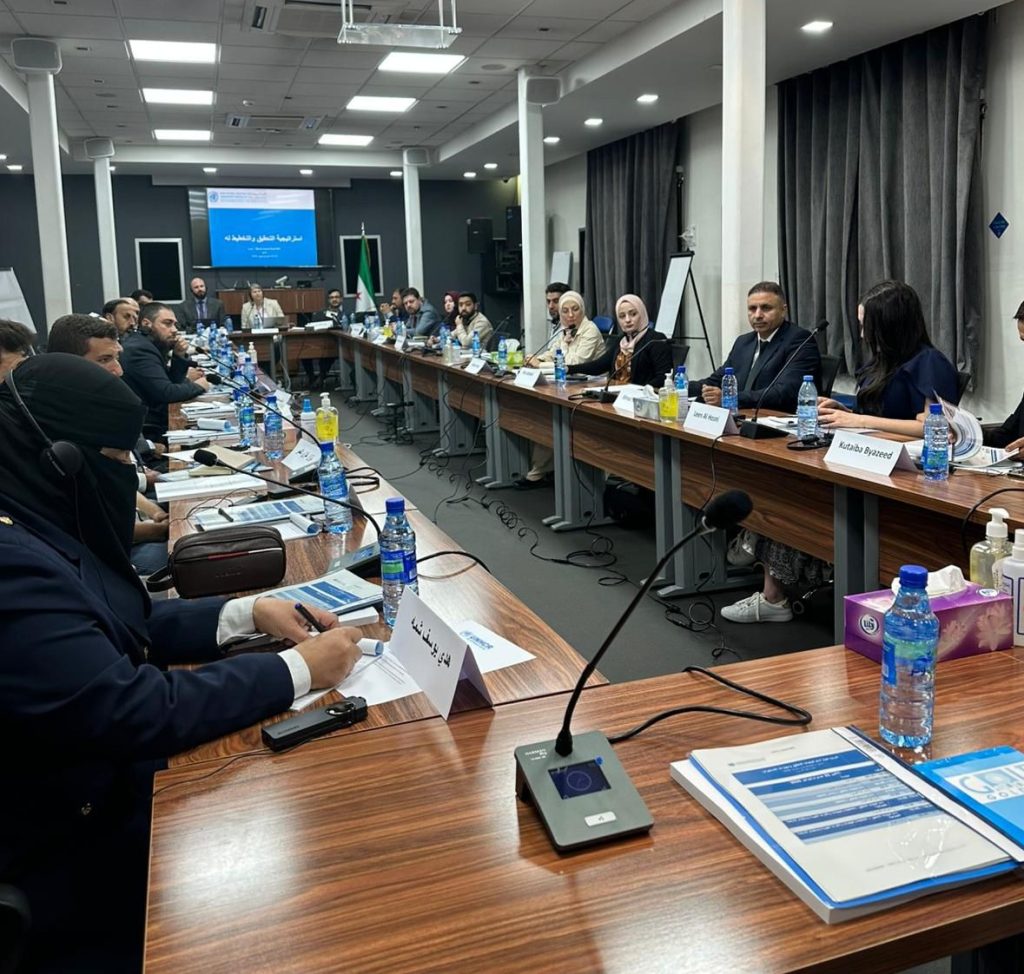
Damascus, 11 May – The International, Impartial and Independent Mechanism for Syria (IIIM‑Syria) convened its first in-country technical workshop in Syria on information management, marking a significant milestone in its engagement with Syrian national stakeholders and institutions, and its support for Syrian‑led justice and accountability efforts.
Held with the support of the Government of the United Kingdom, the workshop provided a platform for in-depth, practical discussions on the effective management of large volumes of information relevant to accountability and justice processes. Sessions focused on key aspects of information management, including identification, collection, preservation, processing, analysis, and secure handling of digital data. Particular attention was given to best practices for organizing and safeguarding information in a manner that supports future Syrian justice and accountability efforts.
The workshop brought together representatives from several Syrian ministries, alongside technical and information management experts. Participants included officials and designated technical focal points from relevant Syrian ministries, national commissions, and other entities with data, archives, and information management responsibilities, including the Ministries of Justice, Interior, and Foreign Affairs, the National Commission on Transitional Justice, the Independent Institution on Missing Persons in the Syrian Arab Republic (IIMP), Mnemonic, and Truth Guardians.
As IIIM’s first in-country technical engagement in Syria, the workshop reaffirmed the Mechanism’s readiness to support Syrian national institutions in strengthening their capacity to preserve and manage information and materials relevant to future justice processes. IIIM hopes this workshop will serve as the first in a series of sustained and in-depth engagements, including future trainings, and technical exchanges on priority issues essential to advancing accountability in Syria.
The IIIM expresses its gratitude to the Government of the United Kingdom for its sponsorship, and to the Syrian authorities and participating institutions for their cooperation and support in making this workshop possible, in furtherance of justice and accountability efforts in Syria.